
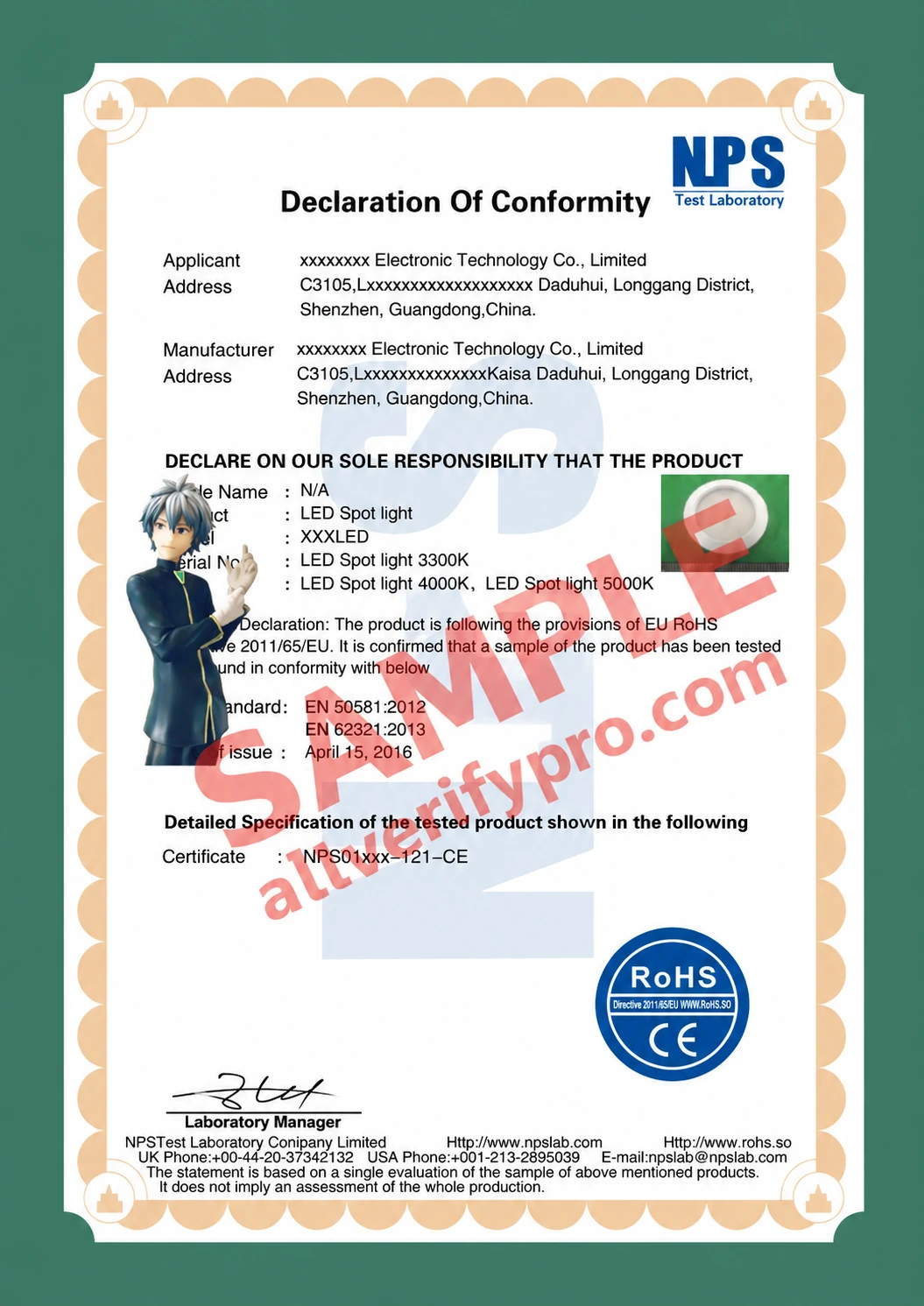
Product Introduction
RoHS is the “Restriction of Hazardous Substances Directive” (Restriction of Hazardous Substances), also known as the EU RoHS Directive. The directive was issued within the European Union in 2003 and aims to restrict certain hazardous substances used in electrical and electronic equipment to protect human health and the environment. The RoHS Directive restricts the use of the following six hazardous substances: Lead (Pb): Harmful to the nervous system, reproductive system, and development; commonly used in the soldering of electronic products. Mercury (Hg): Harmful to the central nervous system and kidneys; commonly used in equipment such as fluorescent lamps and thermometers. Cadmium (Cd): Harmful to the kidneys and bones; commonly used in products such as batteries and dyes. Hexavalent chromium (Cr6+): Causes skin allergies and may cause cancer; commonly used in dyeing and rust prevention treatments. Polybrominated biphenyls (PBB): Potentially harmful to the environment and human health; commonly used in plastics and electronic products. Polybrominated diphenyl ethers (PBDE): Potentially harmful to the environment and human health; commonly used in flame retardants. The RoHS Directive applies to electrical and electronic equipment sold on the European market, including computers, mobile phones, household appliances, and lighting equipment. Manufacturers and suppliers must ensure that their products comply with the RoHS Directive's restrictions and provide declarations of conformity and relevant test reports. Implementation of the RoHS Directive helps reduce the use of hazardous substances and environmental pollution, promote sustainable development, and raise environmental awareness. Similar restrictions on hazardous substances have also been adopted and implemented in other countries and regions. Only products that have been tested and found to meet RoHS standards may enter and circulate in the EU market.
Product previews
Open the preview images.